Ohio's Dramatic History
by John Merrill, editor
History is the record of the who, what and when of events that usually influenced the future. History should not be clouded with the politics of the day, but regrettably, these events often shape how history books are written. Napoleon is quoted as saying: "History is written by the winners," meaning that the survivors of conflicts get to tell others "what actually happened". The truth is more often than not a combination of grays thrown in to give the details more meaning.
Ohio's history falls nicely into this description. Long before Ohio became a state, it was an important piece of land for many powerful entities wanting control over the land and its resources. Some groups wanted the land to remain as it had always been to them: a land of large forests, wide plains, and swamps.
Others realized the importance that the Northwest Territory would play in future development of resources and industry, with Ohio being the cornerstone of that development. Others wanted just a small piece of the land to start over and get away from the destruction experienced during the long and bitter Revolutionary War. These people, only wanted to get along with those already here, but because of cultural differences, neither side completely trusted the other.
So after the war for revolution was settled, the stage was set for dramatic events to be played out. Three main forces were determined to make the area become an extension of themselves. Two of the forces united against the third. Conflicts exploded in the wilderness and swamps, and mayhem ruled across Ohio where today we take pleasant rides in the country to see the fall leaves, or visit a farm to watch how maple syrup is made.
It would take about 30 years from the end of the American Revolution for everything to shake out in Ohio. During this time Ohio would become a state, another war between the United States and England would be fought, and a continental effort for Native Americans to unite against the Americans would fail.

Ancient Ohio Cultures
Long before there were Wyandot, Delaware, Shawnee, Miami or any of the many other Native peoples in Ohio, there were the Ancient People of Ohio. What we know about them is only what we have found that they left behind. No written record of their daily lives exists. No record of their language exists. No handed-down traditions from one generation to the next exists.
All we know is what we can find buried in the ground in the form of pieces of pottery, a few tools and implements, and little else. We don't even know what they called themselves.
We have given these cultures names only as a form of reference to distinguish them in modern day terms. Most notable are the Adena Culture and the Hopewell Culture.
These were the Mound Builders. They left behind large earthen walls and mounds found throughout the state. Many of the mounds have been destroyed, either by farming, construction, or erosion over the years.

ABOVE: Human Effigy Pipe uncovered at Adena Mound that was located on Thomas Worthington's Estate in Chillicothe. On display at the Ohio Historical Center in Columbus. It is the only human shaped pipe discovered to date. It is part of the Adena Culture.
Today we can still see many of these constructions that have been preserved, or in some cases, reconstructed. Most often are the large conical mounds which were burial sites for notable individuals and families. Underneath these conical mounds succeeding generations were laid to rest, along with other items of value to the individual, and then covered with dirt. With each death, a new layer would be added, increasing the size of the mound. A good example of this is the Miamisburg Mound located just south of Dayton. It is over 65' tall and 877' in circumference.
 The other form of construction remaining are called earthworks. These are often incredibly large constructions that cover acres of land. They usually include a geometric wall that is either circular or rectangular in shape and often aligned with the moon rises. Ohio has numerous sites representing different cultures. Most notable is the Serpent Mound, and the Octagon Earthworks plus a number of other sites throughout the state. The giant earthworks were considered to be primarily part of the Hopewell Culture.
In fact, Ohio represented one of the largest deposits of these ancient cultures anywhere in the country. Many of them dating back to the time when the Great Pyramids were being built in Egypt. However, during the early 19th Century, Ohio did not have a historical preservation society and many of those artifacts found in Ohio were shipped away, ending up in European museums, as well as in east coast museums and Chicago.
Early archeological surveys of the state revealed that the Ohio land was home to 1000s of ancient people with that were connected to other groups of people thousands of miles away in all directions.
The peoples that constructed these earthworks lived here 1000s of years before the Native Indians moved into the state, and long before the first known white settlers arrived. Why they left may never be known. Perhaps they had conflicts with other cultures, perhaps the climate changed, perhaps disease destroyed their civilizations. Why they came here, is probably the same reason that everyone comes to Ohio, even today.
Ohio has always been an area that was attractive to peoples of all origins. Its fertile ground, seasonal climate, good hunting, and plenty of water and other natural resources are likely the prime reasons. Opportunity to live a peaceful, successful life are what we all seek.
Two centuries ago, the Ohio's lands were a mix of prairies and heavily forested wilderness, crisscrossed with Native American hunting trails and villages. In fact, it is estimated that there were some 15,000 Native Americans living on this land from 5 different peoples: Miami, Shawnee, Ottawa, Wyandot and Delaware.

These were not peaceful groups, and war between them was a constant threat. When Europeans and in particular the French and English began arriving in the Ohio land, the Native Americans sided with the French because they were more interested in trading with them, but it was more of choosing between two evils.
The Native Americans saw the conflicts between the two super powers (French and English), they found themselves being pulled in both directions by these powers over they (the Europeans) could best take their land. One Native American told an English emissary to one of the villages that:
"You and the French are like the two edges of a pair of shears, and we are the cloth which is cut to pieces between them."
Ohio was a land of great natural resources prized highly by everyone. It was made up of navigable waterways, ideal climate for growing crops, an abundance of game living in the expansive plains Here wildlife thrived, creating large herds of buffalo and deer.
The rivers were much different than they are today. Today, most rivers are largely almost impassible except for the smallest canoe. But in the 1700s, before the lands had begun to be cleared of forest and prairie, the rivers were slow and deep. Large canoes could easily navigate 3 major river systems year-round, from Lake Erie to the Ohio River with only 1 portage spot for each system. Today, that would be an almost impossible accomplishment, even during the rainiest season.
Although the rivers are different and the plains have all but disappeared, today, the same land that supported those 15,000 Native Americans, supports over 10,000,000 people. That's more people than live in Sweden, Greece or Austria.
If a census could have been taken during the early days of statehood, it would have shown that Ohio had a general divide between those settling in northern Ohio and southern Ohio.
Northern Ohio settlers were made up mostly of transplanted Yankees from New England, while southern settlers were actually part of the Virginia Military District with lots of soldiers from the American Revolutionary War laying claim to land as payment for services in the war. These were the farmer warriors of the day-- land loving people that appreciated the rich soils of southern Ohio.
The New England Yankees were primarily merchants and manufacturers-- the industrial complex of 18th Century America.
In the middle of the state there were large numbers of German settlers coming from central Pennsylvania.
As time progressed, the northern half of the state became less northern and the southern half became less southern.
This was Ohio's heritage, the people that made us what we are today. They were resourceful and strong-- the Ohio wilderness was no place for the gentry minded folks or for those not willing to pitch in and work. But long before this immigration to Ohio took place, there were problems between those already living here and those wishing to live here.
 For $35 you could buy a boat to paradise
Early settlers had to cross the Allegheny mountains, an arduous journey that seemed to last a lifetime for those making the trek. When these pioneers reached Pittsburgh where the Allegheny and Monongahela Rivers joined to form the Ohio, boat builders were there to take the money of these pioneers in a promise to ride in the lap of luxury along with your cattle and horses for just $35. These were the flatboats, or more commonly called "broad horn" boats. They were actually like floating barnyards.
Once they set off from Pittsburgh, their next stop was Wheeling where they load up on supplies of salt, pork, dried fruits, cornmeal and molasses. Then it was off again into the Ohio Valley. When they reached their destination, the flatboat would be dismantled and used to build a cabin until a proper cabin could be constructed.

Reconstructed flatboat located along the Ohio River in Marietta. This replica built in 1975 is based on the flatboat used to bring Ohio Company of Associates settlers to Marietta in 1788.
The Adventure Galley: read more about the first flatboat to bring settlers to the Ohio Country >>
Flatboats were designed to carry cargo downstream, floating with the current. With flat bottoms, they were easily built to any size needed. The 18th and early 19th Centuries, these boats were the most popular method of transport for settlers traveling west into Ohio and Kentucky. They were often called "Kentucky Boats."
Keel boats were entirely different types of boats used to go up-stream. Upon arrival at their final destination, they would dismantle the boat use the wood to build the settlers' new house.
Even into the late 19th century, farmers built this type of boat to ship their market down-river. Once the produce was sold, they would sell the boat for its lumber. The farmer would then walk home or find passage on a steamboat back upriver.
Early conflicts
Some groups of Native Ohio peoples welcomed the new settlers. Others, did not, particularly those that had had dealings with the white-man in the past and found they could not be trusted and their treaties meant nothing if the whites wanted to change the rules. This led to violent conflicts.
During the mid 1700s, many of the Native Americans sided with the French in hopes of stemming the tide of British colonists coming into the Ohio territory. When the British defeated the French in 1763, Native Americans were left to fend for themselves against the British and settlers. Then when the split came between the Americans and the British in 1776, the Native Americans again decided to side with what they perceived as the lesser of 2 evils, and became allies with the British. Once again the Native Americans were on the losing side and left to fend for themselves.
As a result of these bloody conflicts, over the years, Native Americans had become painted with a broad brush as being blood-thirsty savages who were always at war with the settlers. Although not all Native Americans were anti-American. A number of them were friendly with the early settlers. This friendship was more often than not, not mutual. Distrust from wary settlers often led to whites killing friendly Native peoples. These acts led to a racial distrust between both the whites and Native peoples.
After the American Revolution, Ohio began to see increasingly large numbers of settlers move into the area. They saw the rich land as a place to start over and lay claim to the promises created by the new country. The problem was that the land had been off limits to American settlers. Large numbers of Native peoples living north of the Ohio River had signed treaties with the government that promised settlers would remain south of the Ohio and the Native peoples would stay north . This treaty was impossible to enforce and settlers quickly filtered into southern Ohio, and this eventually led to even more violent conflicts.
In 1794 at the Battle of Fallen Timbers in northwest Ohio, a large contingent of Native Americans were defeated by an American military force. This led to a peace treaty (Treaty of Greeneville) being signed by many of those at the battle. The treaty gave up almost 2/3s of the land that is now present day Ohio.
There was an outspoken contingent of Native Americans that did not accept the treaty and they continued the fight that led them to again join forces with the British during the War of 1812. Once again, the Native Americans were on the wrong side and lost. This eventually led to their complete expulsion from Ohio (even those Native Americans who were friendly toward the Americans) in 1843.
The Civil War: a divided state and nation
In the mid 19th Century, Ohio found itself divided, politically. In the beginning the state was made up predominately settlers from New England in the northern regions and the southern half were predominately southern farmers. As these two groups aged, they mingled together, but each group still held firm to their political views.

It seemed there was no middle. Folks were either pro Union (anti-slavery) or pro state's right (pro slavery). Ohio was a non-slave state, so the issue was more about state's rights and anti-slavery. Escaping slaves made their way north through Ohio on what became known as the Underground Railroad which was nothing more than those sympathetic to the former slaves and providing some assistance to them to move north.
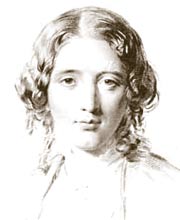
"So you're the little woman who wrote the book that made this great war."
This is what President Lincoln said to Harriet Beecher Stowe upon their meeting in 1862. Stowe was the author of Uncle Tom's Cabin. Her book was the best-selling novel of the 19th Century and is credited with helping fuel the abolitionist's cause in the 1850s which led to the Civil War. Stowe lived in Cincinnati. It was during this time that she became involved in Reverend John Rankin's anti-slavery efforts. It was during this time period that she heard the stories of escaping slaves that passed through the area that formed the basis of her best-selling book.